
What That Soot on Your Walls Is Really Telling You
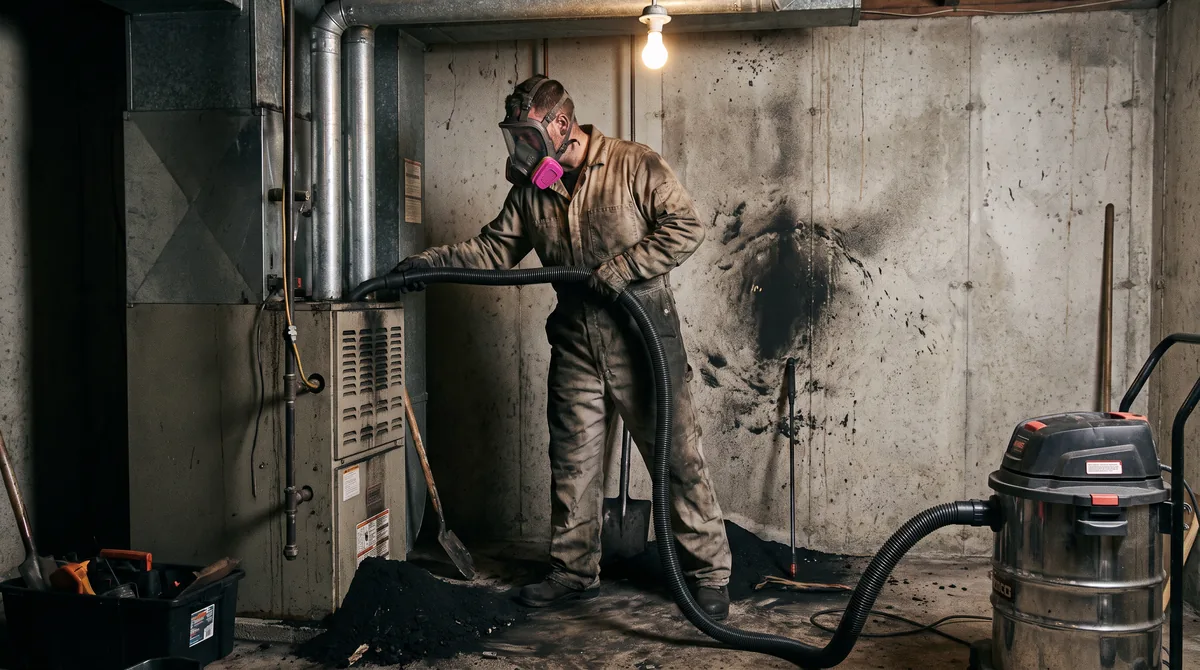
A Healthy Furnace Shouldn't Leave Soot Behind
A well-maintained heating system produces little to no soot. Your furnace's job is simple: burn fuel and distribute the heated air through your home's ducts or pipes. Whether it runs on oil, gas, wood, or coal, a furnace that's working correctly burns that fuel cleanly. When something's off, combustion becomes incomplete and the system starts sending unburned gases and fine soot particles into the air you breathe, not just up the flue.
How Soot Shows Up in a Home
When fuel burns, it releases gases carrying tiny particles of solid matter. As those hot gases hit cooler air, the particles condense — and because this happens in the air itself, it's essentially invisible at first. You usually don't notice it until it's already collected on a surface.
Dark gray staining on the wall behind a picture frame or other wall hanging
Sooty buildup around heat registers or vents
Staining across ceilings, especially near the furnace
Visible soot on the furnace unit itself
Any of these is worth paying attention to, even if it seems minor. Soot on the furnace itself, in particular, is never a good sign.
The Bigger Concern Is What You Can't See
Soot is primarily carbon, and where you can see it accumulating, there's a real chance the air also contains unhealthy levels of carbon monoxide. Carbon monoxide is a colorless, odorless gas produced by incomplete combustion, which makes it impossible to detect on your own — you won't smell it, and you won't see it the way you can see soot stains. A furnace that isn't operating properly can push more carbon monoxide into your living space than it should, even while the visible soot looks like a minor cosmetic issue.
Health Effects of Breathing Sooty Air
Soot particles are small enough to get deep into your lungs, and breathing that air over time can inflame your respiratory system and affect your blood vessels. Children and anyone with an existing respiratory or heart condition are especially vulnerable to these effects, even at exposure levels that might not bother a healthy adult much in the short term.
What to Do If You Notice Soot
Visible soot is a signal to act, not just clean up and move on.
Install carbon monoxide detectors on every level of the home, if you don't already have them
Have your heating system inspected and serviced to identify and correct the source of the soot
Have soot-affected surfaces professionally cleaned rather than just wiped down, since soot residue can restain and is difficult to fully remove with household cleaners
When to Call a Professional
If you're seeing soot staining around registers, on ceilings, or behind wall hangings anywhere from Brewer and Bangor to Ellsworth, Bar Harbor, or Mount Desert Island, don't treat it as just a cosmetic problem. Our smoke, fire, and soot restoration team can clean the affected surfaces properly and help you understand what your heating system needs next. Call us at (207) 989-4697 to schedule an inspection and cleanup.