Removing Nicotine and Smoke Odor From Your Home
Why Nicotine Odor Doesn't Just Air Out
Open a window for a few days and the smell fades, but with heavy or long-term smoking it often comes right back once the house warms up or the humidity rises. That's because nicotine isn't just an odor sitting in the air — it's an oily residue that settles onto surfaces and keeps releasing odor long after the last cigarette. How hard it is to remove usually comes down to three things: how long the residue has had to set, how much was smoked in the space, and whether the home had decent ventilation while it was happening.
Where Nicotine Residue Actually Ends Up
Nicotine doesn't stay put on one surface — it travels through a house and settles almost everywhere air moves.
Flat painted walls and trim
Textured or popcorn ceilings
Plastic and vinyl surfaces, including window frames and blinds
Curtains, upholstery, and other fabrics
Carpet and the carpet pad underneath
Bare, unsealed wood such as closet shelving or subflooring
In heavy, long-term cases, we've seen nicotine residue work its way into insulation and even bare concrete in basements and other unsealed areas — surfaces most homeowners would never think to check.
Why Some Rooms Clean Up Faster Than Others
The finish on a surface matters as much as the surface itself. Glossy paint and wood sealed with polyurethane tend to respond well to cleaning because the residue mostly sits on top of the finish rather than soaking into it. Flat paint and bare, unsealed wood are a different story — they're porous, so nicotine works its way in and keeps bleeding odor back out even after a good wipe-down.
What It Takes to Fully Remove It
For lighter cases, degreasing and deodorizing the affected surfaces is often enough to knock out both the staining and the smell. Heavier cases take more work, and sometimes more than one pass.
Washing walls, trim, and ceilings more than once — sometimes referred to as cleaning "to paint"
Sealing surfaces with an oxidizing, deodorizing primer made specifically for nicotine before repainting
Removing and replacing carpet and pad rather than trying to clean around the problem
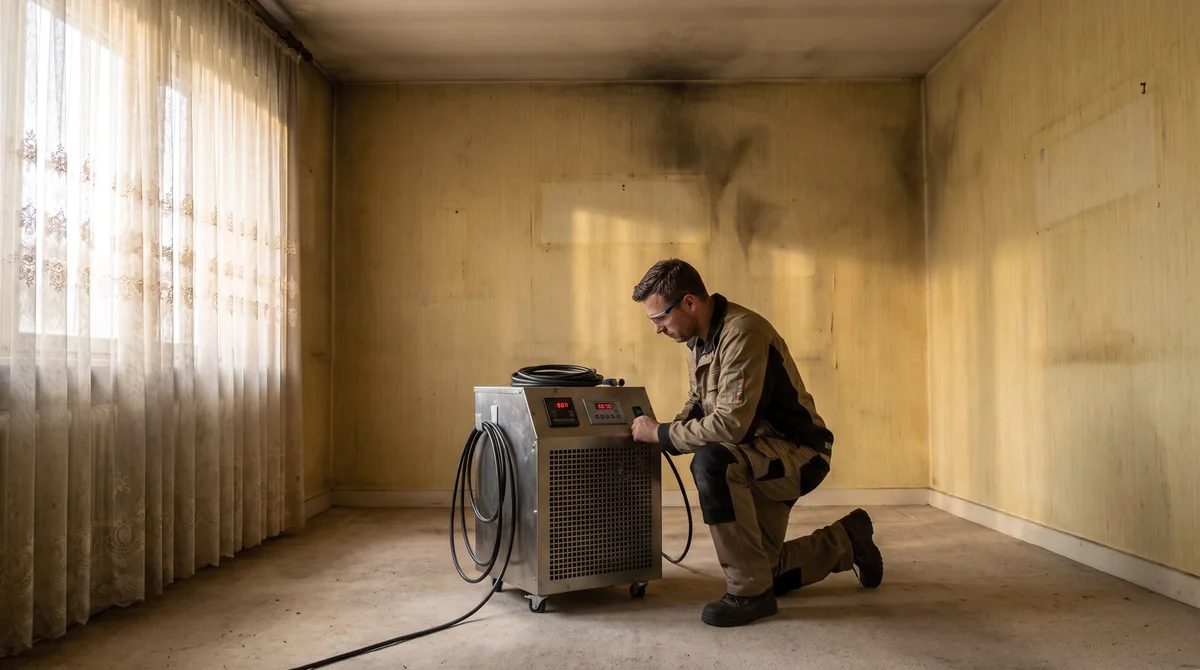
Running an ozone or hydroxyl generator to neutralize odor that's worked into porous materials
For complete odor removal, every affected surface in the space — walls, ceilings, trim, fixtures, and contents — generally needs to be addressed. Treating just the obvious spots tends to leave the smell coming back within a few weeks.
DIY Cleaning vs. Bringing in a Professional
A light nicotine odor in a single room might respond to a thorough scrub with a household degreaser and some fresh paint. But once staining shows up on ceilings, blinds, or through more than one coat of paint, it usually means the residue has soaked in deeper than surface cleaning can reach — and that's when a professional assessment saves time and money over trial and error.
When to Call a Professional
We handle nicotine and heavy smoke cleaning for homes and rental properties throughout Brewer, Bangor, Old Town, Ellsworth, Bar Harbor, Mount Desert Island, and the rest of Central and Eastern Maine, including seasonal camps that sit closed up for months at a time. If you're dealing with stubborn nicotine odor, staining that keeps bleeding through fresh paint, or a rental turnover that needs to be odor-free before the next tenant moves in, call us at (207) 989-4697 and we'll walk you through what your specific situation needs.