
Heating Oil Spill at Home: What to Do in the First Hour
Why This Is a Maine Problem
Home heating oil tanks are everywhere in Maine — tucked into basements, garages, and outbuildings across Brewer, Bangor, Orono, Old Town, Ellsworth, and out toward Bar Harbor and Mount Desert Island. Most run for years without issue, but corroded tanks, failed supply lines, and overfills during a delivery can all lead to a spill, sometimes without anyone noticing right away beyond a persistent oil smell.
Step One: Call the Maine DEP
As soon as you identify a leak, spill, or unexplained oil odor, contact the Maine Department of Environmental Protection. The Maine DEP may recommend also calling your local fire department and your oil service company so they can shut off valves and help assess the immediate risk. In most situations, the DEP will monitor vapor levels and advise on ventilation before anything else happens.
Step Two: Protect Your Family Before the Property
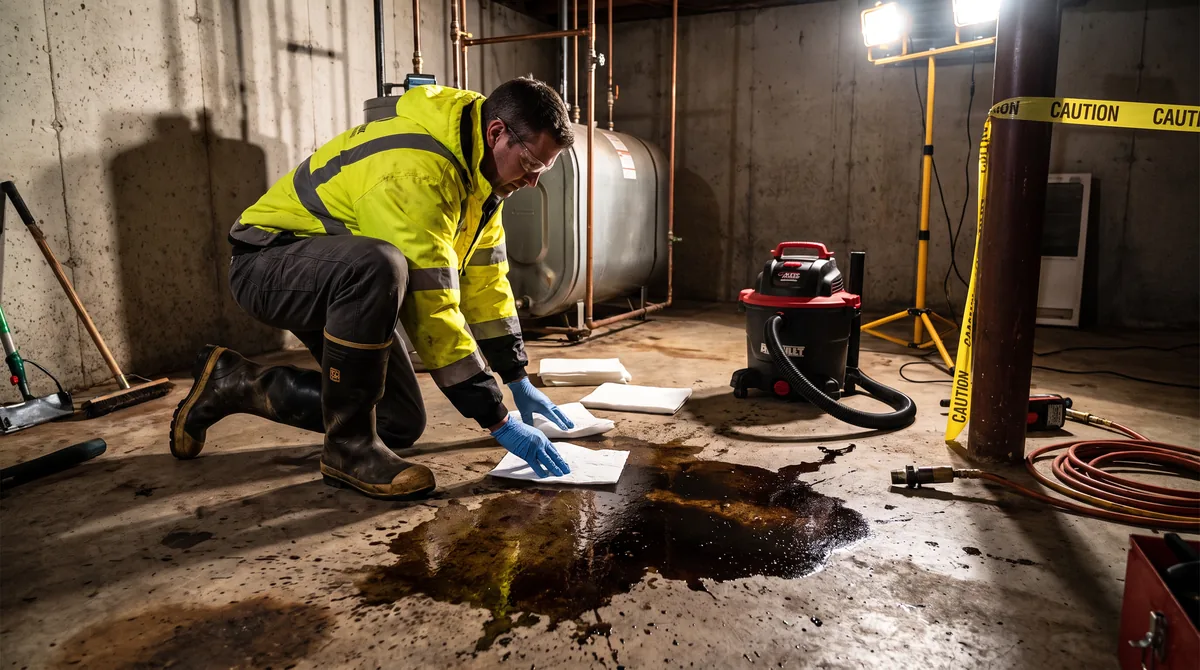
Once the DEP has been notified, the priority shifts to limiting everyone's exposure to the oil and its vapors. If it's safe to do so, put on hand protection, absorb the bulk of any pooled oil, and bag it up to carry outside — this cuts down on vapors building up indoors. If it isn't safe, don't try to be a hero: open windows for ventilation and get family members and pets out of the affected area.
Short-term exposure to heating oil vapor can cause real symptoms, and it's worth knowing what to watch for:
Eye irritation and headache
Nausea, dizziness, or drowsiness
Loss of coordination or disorientation
Skin irritation, redness, or swelling with direct contact
If anyone in the home develops severe or lingering symptoms, get medical attention rather than waiting it out.
What Professional Cleanup Involves
Once the spill is contained and the DEP has weighed in, cleanup typically starts with setting up negative air to control vapors, followed by bulk oil removal. From there, our technicians evaluate whether flooring, subflooring, or contents need to be removed, based on how porous the affected materials are and how much oil they've absorbed.
When oil has reached concrete or other structural areas, the process gets more involved: degreasing, extraction, and an acid-etch rinse to work the residue out of the concrete itself, followed by sealing and fogging the surrounding areas to knock down lingering odor before the space is considered restored.
What It Can Cost — and Why Speed Matters
Some homeowner's insurance policies and Maine DEP programs may help offset the cost of oil spill cleanup, so it's worth asking early. That said, a serious spill that reaches soil, groundwater, or structural materials can turn into an environmental cleanup running into the tens of thousands of dollars. Acting within the first hour — containing what you can safely and getting the right people on the phone — is genuinely the difference between a manageable job and a much bigger one.
When to Call a Professional
If you've had a heating oil spill or persistent oil odor anywhere from Brewer or Trenton out to Bangor, Ellsworth, or Downeast, our oil spill cleanup team is ready to help after the DEP has been notified. Call us at (207) 989-4697 and we'll get technicians on site to handle bulk removal, structural cleaning, and odor control so your home is safe again.