
Hantavirus and Rodent Droppings: What Maine Homeowners Need to Know
A Disease Most Mainers Haven't Heard Of, Until It's Close to Home
Hantavirus Pulmonary Syndrome, usually just called HPS, isn't something most people think about until they're staring at mouse droppings in a garage, camp, or crawlspace. It's rare, but it's serious, and Maine has had a confirmed case, so it's worth understanding rather than ignoring.
Where HPS Came From and How It Reached Maine
HPS was first identified in 1993, when an outbreak of unexplained, severe lung illness struck the southwestern United States. Since then, cases have shown up in states across the country. Maine had its first documented human case in April 2011, in a resident who hadn't traveled outside the state, meaning the exposure happened right here.
Why HPS Is Taken So Seriously
HPS is a life-threatening viral illness with a fatality rate estimated at roughly 30 to 40 percent. There's no cure and no specific antiviral treatment — once someone is sick, medical care is limited to supportive treatment while the body fights the infection. That combination of severity and no real cure is exactly why prevention matters so much more than it might for other rodent-related nuisances.
Not Every Rodent Carries It
HPS isn't spread by every mouse or rat you might find in a Maine home. In North America, it's specifically linked to deer mice, white-footed mice, rice rats, and cotton rats. Deer mice and white-footed mice are both found in Maine, which is part of why the state has seen a confirmed case. You can't tell by looking whether a particular mouse is a carrier, so any rodent droppings should be treated with caution regardless of species.
How Symptoms Show Up
Early HPS symptoms are easy to mistake for the flu, including:
Fatigue
Fever, chills, and muscle aches, especially in the thighs, hips, back, and shoulders
Sometimes headaches, dizziness, nausea, vomiting, or diarrhea
The dangerous phase comes later. About four to ten days after those early symptoms, patients can develop coughing and shortness of breath as fluid builds up in the lungs. That progression is what makes HPS so serious, and it's why anyone with flu-like symptoms after exposure to rodent droppings should mention that exposure to a doctor right away.
How People Actually Get Infected
You don't need to touch a rodent to be exposed. Most people are infected by breathing in tiny, aerosolized particles of urine, droppings, saliva, or nesting material from infected rodents, for example when dust gets stirred up while cleaning a garage, shed, or storage area. Infection can also happen if these materials get into a cut or scrape, or, rarely, from a rodent bite. There's no evidence of HPS spreading between people.
The Single Most Important Thing You Can Do
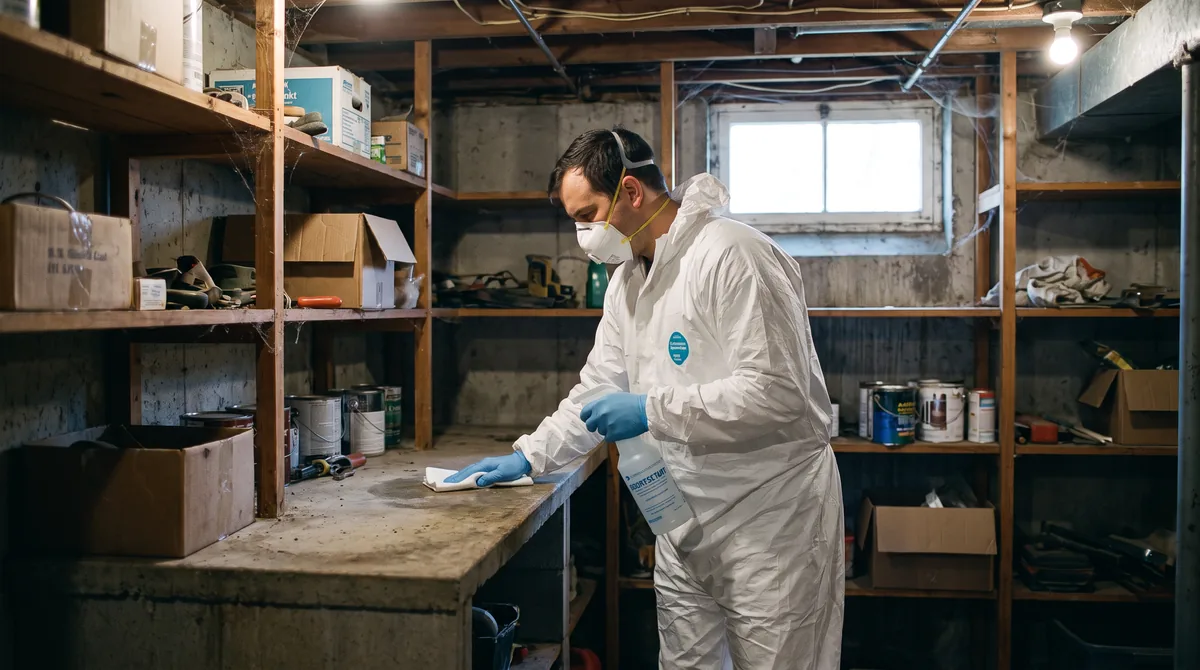
If you take away one thing from this article, make it this: never sweep or vacuum dry rodent droppings, urine, or nesting material. That's the fastest way to send virus particles into the air where they can be breathed in. Before cleanup begins, thoroughly wet the area down with a disinfectant or a bleach-and-water solution, let it sit, and then wipe it up rather than stirring it into dust.
Beyond that one rule, prevention comes down to keeping mice and rats out of the house in the first place: sealing entry points, storing food securely, and addressing rodent activity in camps, sheds, and outbuildings before it becomes an infestation. This matters as much for seasonal camps around Old Town, Bar Harbor, and Mount Desert Island, closed up for months at a time, as it does for year-round homes in Brewer, Bangor, or Ellsworth.
When to Call a Professional
If you're dealing with a heavier rodent infestation, a large amount of droppings, or you're simply not comfortable doing the cleanup yourself, that's a reasonable point to bring in help. Our rodent and guano damage cleaning service handles this kind of decontamination with EPA-registered disinfectants and proper containment, so nothing gets stirred into the air of your home. Call us at (207) 989-4697 if you'd rather have a trained crew handle it than risk cleaning it up yourself.