Bird and Bat Droppings: Why Guano Cleanup Isn't a DIY Job
What's Really in Bird and Bat Droppings
Accumulated bird or bat droppings look like a simple mess to clean up, but they can carry disease-causing organisms that pose a real risk to anyone who disturbs them without the right protection. This is especially true in attics, barns, church steeples, camps, and older outbuildings across the Bangor and Brewer area, where droppings can build up undisturbed for months or years.
Two fungal diseases are the biggest concern: histoplasmosis and cryptococcosis. Both are caused by organisms that grow in accumulated droppings and become dangerous once they're inhaled.
Histoplasmosis: The Bigger Long-Term Risk
Histoplasmosis is caused by a fungus that thrives in soil that has been enriched by years of accumulated bird or bat droppings. It's not usually a concern with fresh droppings alone — the fungus needs time, moisture, and organic buildup to establish itself. Once it does, it can persist in that soil for a long time.
People are infected by breathing in the fungal spores, which can be carried on wind or dust. Most infections are mild and flu-like, but in some cases it can lead to more serious lung problems.
Cryptococcosis: Mostly a Pigeon Problem
Cryptococcosis is a separate fungal illness that's most often linked to pigeon droppings, particularly around elevated roosting spots like barn lofts, bell towers, and building ledges. Like histoplasmosis, it's contracted by inhaling the organism, not by touching the droppings themselves.
Why Dry, Disturbed Droppings Are the Most Dangerous
Here's the part homeowners often get wrong: droppings are at their most hazardous exactly when they look easiest to deal with — dry, crusted, and ready to be swept up. Sweeping, scraping, or dry-vacuuming dried droppings is what turns those spores into airborne dust, and that dust can be inhaled by anyone nearby, not just the person doing the cleaning.
That's why proper cleanup always starts with wetting the material down, never with a broom or a shop vac.
Bats Add a Rabies Risk on Top of the Fungal Risk
If bats are involved, there's a second hazard entirely separate from fungal spores: rabies. Rabies isn't something you catch from breathing bat droppings — it's spread through a bite or scratch from an infected bat, or contact with its saliva. That means live or dead bats should never be handled bare-handed, even briefly, and any bat encountered during a cleanup should be treated with caution until it's safely removed.
Why This Isn't a Weekend DIY Project
Safe cleanup depends on a few things that are hard to pull off with household supplies:
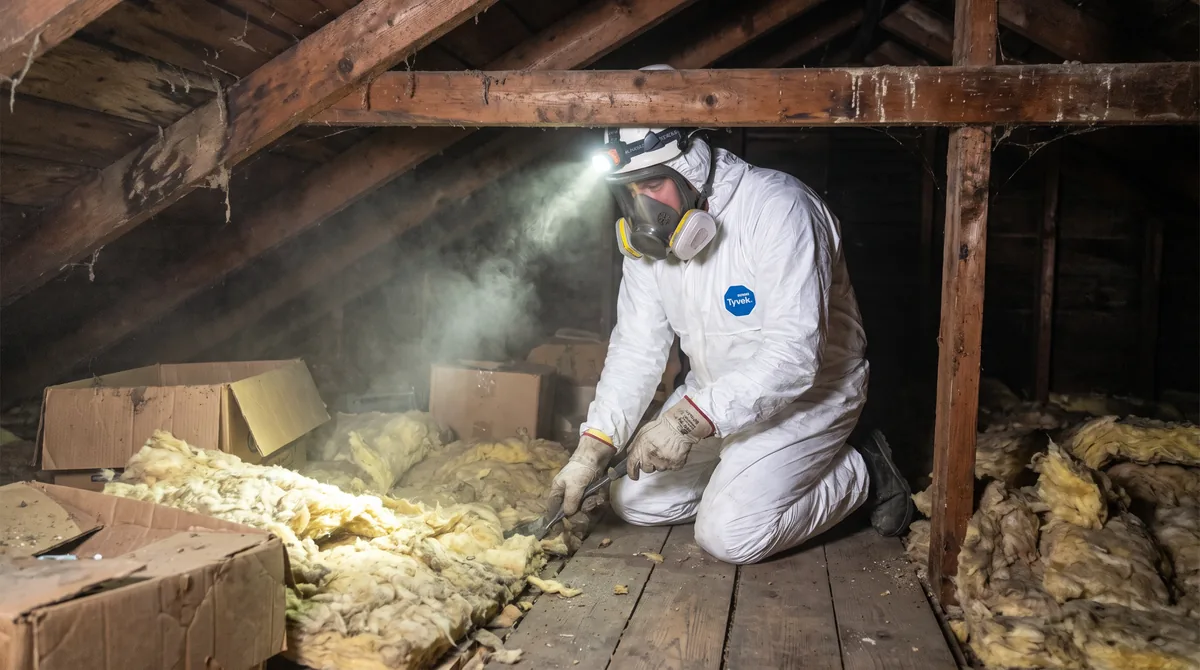
A full-face respirator with a proper particulate filter, not a basic dust mask
Wetting droppings down before any removal begins, to keep spores from becoming airborne
Heavy-duty sealed plastic bags for anything removed, disposed of properly rather than left in a regular trash bag
Protective clothing that keeps contaminated dust off skin and out of your home's living space
Attempting this with a broom, a shop vac, and no respiratory protection is one of the more common ways people accidentally expose themselves and their families to spores they can't even see.
Where We See This Most Often in Maine
We regularly get calls about guano buildup in attics and eaves in Brewer, Bangor, Orono, Old Town, and Ellsworth, plus seasonal camps and rental cottages around Bar Harbor and Mount Desert Island that sit closed up for months at a time — exactly the conditions birds and bats look for.
When to Call a Professional
If you're finding accumulated droppings in an attic, chimney, barn, or crawlspace — especially buildup that's been sitting for a while, or if bats are involved — it's worth having it handled by people with the right respiratory protection and disposal process rather than tackling it yourself. Our team offers rodent and guano damage cleaning for homes and camps throughout Penobscot and Hancock Counties, using proper containment and PPE from start to finish. Call us at (207) 989-4697 to talk through what you're dealing with and get it cleaned up safely.