Inside Our Disaster Response Process: How We Assess a Loss
It Starts With Listening
Every disaster response job begins the same way: by collecting information directly from the client. You know your house better than anyone who's about to walk through the door, and a short conversation can surface details that shape the entire job — when and how the loss happened, your insurance information, which areas were affected, and which items in the home matter most to you.
Calming Fears Before the Work Begins
A flooded basement or a fire-damaged kitchen is stressful enough without wondering whether your family, pets, or belongings are safe. Part of assessing a loss is listening for those specific worries and addressing them directly. If someone in the household has allergies or asthma, for example, we can section off clean, unaffected areas of the home using containment and negative air machines so the family has a safe space to use while work continues.
We also help clients gather what they need if they have to stay elsewhere for a few days — clothing, medications, phone chargers, and other essentials — so a hotel stay or a night at a family member's house is one less thing to plan around during an already difficult time.
Identifying Affected Areas and Hidden Complexities
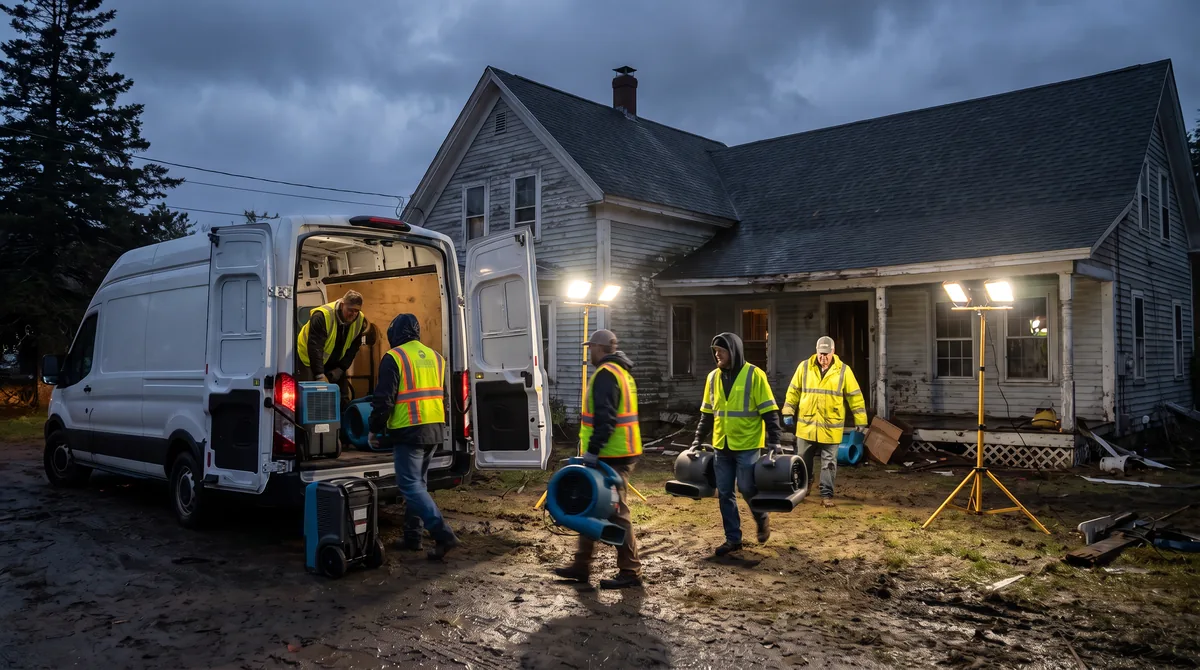
Once we have a clear picture from the client, the next step is walking the property to identify every affected area and any complicating factors that could change how the job needs to be handled. That might mean lead-based paint, asbestos-containing materials, visible mold growth, electrical or plumbing hazards, or areas that need special protective equipment before anyone can safely work in them.
Some situations bring extra layers of complexity. A multi-unit water loss with several tenants and separate insurance policies takes more coordination than a single-family home. A hoarding situation adds an emotional dimension on top of the physical one, since contents are often tied to the client in ways that go well beyond their dollar value — that's a large enough topic on its own that we won't try to cover it fully here, but it's a good example of how the "affected areas" step can turn into something far more involved than it first appears.
Mapping the Moisture, Planning the Work
For a water loss specifically, we build a moisture map — using visual inspection along with invasive and non-invasive moisture meters to measure how much moisture different materials are actually holding, compared against unaffected "control" areas of the home. That comparison tells us what needs to come out, what can be dried in place, and how to dry it efficiently. Measuring relative humidity and temperature at the same time helps determine how much drying equipment the space actually needs — too little airflow and humidity can climb high enough to cause secondary damage and give mold a chance to start growing in areas that weren't part of the original loss.
With that information in hand, we put together a mitigation, remediation, and restoration plan and make sure the client, their insurance company, and every technician on the job are working from the same scope. Because so much of a disaster job only becomes fully clear once the work is underway, a rough estimate is usually all that's possible on day one — an accurate, detailed estimate typically comes together a few days in, once the early discoveries are known.
Keeping Everyone on the Same Page
Communication doesn't stop once the plan is set. As work progresses, new information turns up more often than people expect, and when it does, the client, the insurance adjuster, and our technicians all need to hear about it so the plan can be adjusted and confirmed. That ongoing back-and-forth is what keeps a job on track, keeps the client informed instead of surprised, and keeps everyone protected if the scope changes.
Following Through to Sign-Off
Once the work is complete, we walk the property with the client and go over every area before signing off. That gives you the chance to ask questions and make sure nothing was missed, and it gives your reconstruction contractor — whether that's us or someone else — the full picture needed to rebuild correctly. If anything comes up during that final walkthrough, we can usually address it on the spot rather than scheduling a separate return visit.
A Team With Deep Local Experience
Penobscot Cleaning Services has been responding to disasters in Maine homes and businesses for 50 years, and that experience shapes how we assess every loss — not just what we clean up, but how we communicate with clients and insurance adjusters along the way. Our Disaster Response team covers Brewer, Bangor, Orono, Old Town, Ellsworth, Bar Harbor, and the wider Mount Desert Island area. If you're dealing with a loss right now, call us at (207) 989-4697.