Former Meth Lab Cleanup: What Maine Property Owners Need to Know
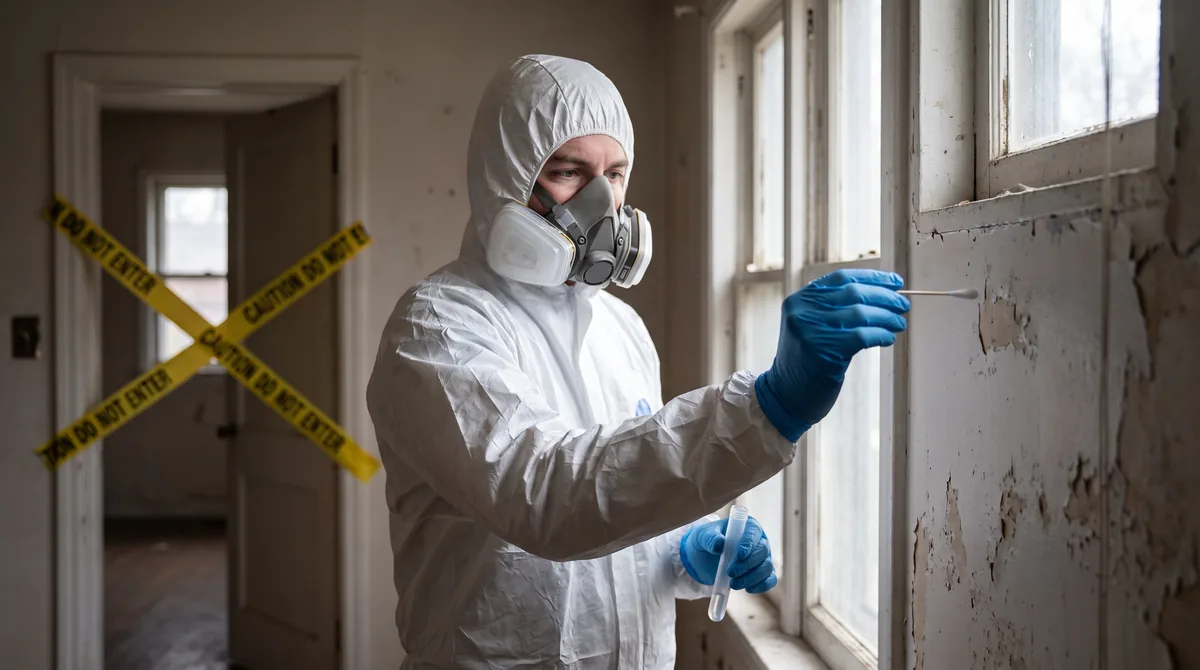
How Meth Production Contaminates a Property
When someone cooks methamphetamine inside a home, apartment, camp, or outbuilding, the process releases chemical vapors into the air almost continuously. Those vapors don't stay confined to the room where the cooking happened — they travel through hallways, settle into cabinets and closets, and get pulled into the heating and cooling system, carrying contamination to parts of the property that were never anywhere near the actual lab.
The chemicals involved also splash, spill, and settle as fine residue on nearby surfaces. Because carpet, drywall, insulation, upholstered furniture, and even wood trim are porous, they absorb that residue rather than simply holding it on top. That's the core problem with a former meth lab property: the visible mess is usually gone long before a property owner ever gets involved.
Why the Danger Doesn't End When the Equipment Is Gone
By the time a property owner, buyer, or landlord learns that a unit was used to manufacture meth, law enforcement has typically already removed the chemical containers, glassware, and other obvious lab equipment. That can create a false sense that the property is now safe. In reality, the materials that absorbed vapors and residue during the cooking process are usually still in place, and there's no single "recipe" for meth — different methods leave behind different combinations of solvents, byproducts, and residues, which is part of why there's no simple, universal test that proves a property is fully clean.
Health Effects of Residual Contamination
Exposure to leftover meth lab contaminants can cause real health problems, even when a property has been sitting empty for months or years.
Respiratory irritation, coughing, and breathing difficulty
Headaches, dizziness, and nausea
Skin and eye irritation from contact with contaminated surfaces
More severe reactions, including burns and lung irritation, from high or direct exposure
Poorly understood long-term risk from repeated low-level exposure, which is one reason a cautious approach makes sense even for lower-level contamination
Why DIY Cleanup Usually Falls Short
It's tempting to treat a former meth lab like an unusually dirty rental turnover — scrub the walls, shampoo the carpet, run a few fans, and call it done. The problem is that household cleaners aren't formulated to break down these specific residues, and a quick surface wipe does nothing for contamination that has already soaked into porous materials.
DIY cleanup can also spread the problem. Running fans or using a standard shop vacuum without proper containment can stir up contaminated dust and push it into rooms that were never affected. Anyone doing the work without the right gloves, respirator, and eye protection is also putting themselves in direct contact with the same chemicals that caused the original health concerns.
How Professional Cleanup Works
Restoration crews treat a former meth lab as a structured project, not a single cleaning pass. A few principles guide the work:
Ventilation first and throughout — the property is aired out for an extended period before work begins, and airflow is maintained during the entire cleanup so vapors have somewhere to go instead of resettling
Removal of porous and absorbent materials — carpet, padding, drapes, insulation, and in some cases sections of drywall are removed and disposed of rather than cleaned, since these materials hold onto contamination in ways that can't be fully reversed
Cleaning of hard surfaces — walls, floors, counters, and cabinetry are cleaned thoroughly, with a sealing product sometimes applied afterward to lock in any trace residue that couldn't be physically removed
Attention to the HVAC system — filters are replaced, ductwork and vents are cleaned, and surfaces near supply and return registers are addressed, since a contaminated HVAC system will keep redistributing residue through the building long after the rest of the cleanup is finished
Once that work is done, the property should be checked again for lingering odor or staining — either one is a sign that more targeted work is still needed.
Buying, Renting, or Inheriting a Suspected Former Lab Property
If you suspect a property in the Bangor, Brewer, Old Town, or Ellsworth area — or a camp or rental property Downeast near Bar Harbor or Mount Desert Island — may have been used as a meth lab, your local law enforcement agency or county records are a good starting point to confirm what happened. From there, it's worth looping in your insurance carrier early, since coverage and liability questions tend to come up quickly once contamination is confirmed.
When to Call a Professional
If you're dealing with a property with a known or suspected meth history, don't guess at whether it's safe to reoccupy. Our team offers Drug Lab Cleanup for property owners throughout Penobscot and Hancock counties, and we can walk you through what an assessment and cleanup actually involve. Call us at (207) 989-4697 to talk through your situation.