
Why Cleaning Up Blood or Bodily Fluids Yourself Is Riskier Than It Looks
Why a Spray Bottle and Gloves Aren't Enough
After an accident, a medical emergency, an unattended death, or a violent incident in a Brewer, Bangor, Orono, or Downeast home or rental property, someone eventually has to deal with the blood or bodily fluids left behind. The natural instinct is to grab a pair of gloves, some bleach, and a roll of paper towels and just handle it. That instinct makes sense, but blood and other bodily fluids can carry pathogens you can't see, smell, or wipe away with confidence. The real danger isn't the stain on the floor. It's what might be living in it.
What Can Actually Be Living in Blood
Blood can carry bloodborne pathogens: infectious microorganisms that cause serious, sometimes life-threatening illness in people who are exposed to them. The three most commonly discussed are:
Hepatitis B (HBV), a virus that attacks the liver
Hepatitis C (HCV), another liver-damaging virus that can become a long-term chronic infection
HIV, the virus that causes AIDS
These pathogens can also be present in other bodily fluids that have mixed with blood. There's no way to tell just by looking whether a particular stain is contaminated, which is exactly why a cautious approach treats every situation the same way, whether the stain is from last night's fall down the stairs or something that happened days ago.
How Exposure Actually Happens
People tend to picture disease exposure as something dramatic, but with bloodborne pathogens it usually comes down to two fairly ordinary scenarios:
A puncture or cut from something sharp hidden in the mess, like broken glass, a stray needle, or a jagged piece of debris
Contact between contaminated blood or fluid and your eyes, mouth, nose, or a cut or scrape on your skin
Both are easy to run into during a DIY cleanup. Kneeling directly in a stain, wiping with thin dollar-store gloves, or not realizing there's a sliver of glass buried in the material are all common ways an ordinary cleanup turns into an exposure incident.
Why Professionals Treat Every Scene the Same Way
Trained cleanup crews work from a simple rule: treat all blood and bodily fluids as if they're infectious, no matter who they came from or how the situation looks. This mindset, often called universal precautions, is standard in healthcare and professional cleanup settings because it removes the guesswork. Nobody has to make a judgment call about whether a particular stain is "probably fine." It's always handled the same careful way.
What a Professional Crew Does Differently
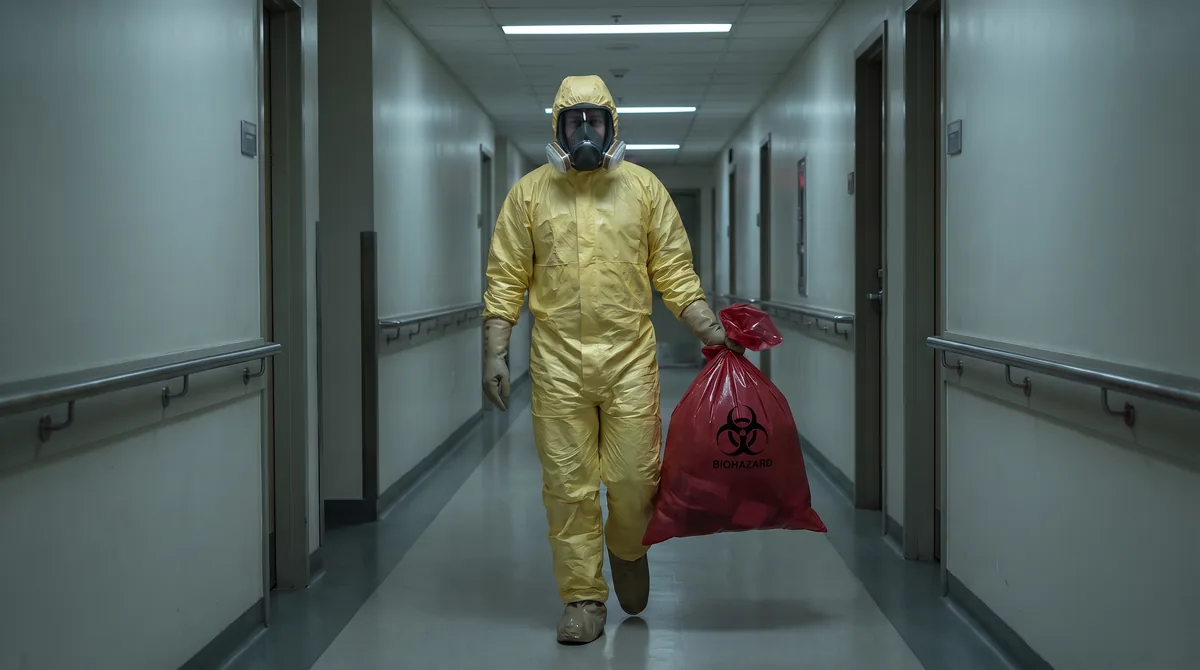
When our technicians respond to a blood or bodily fluid situation, the process looks very different from a homeowner grabbing cleaning supplies under the sink. It starts with the same universal-precautions mindset described above, backed by the right equipment and process:
Personal protective equipment, including gloves rated for this kind of work, protective gowns or coveralls, eye protection, and masks, so no bare skin or mucous membrane is exposed
Engineering controls such as puncture-resistant sharps containers for anything hidden in the debris, so a stray needle or piece of glass doesn't become the next injury
Containment of the affected area, so contamination doesn't spread to hallways, other rooms, or unaffected parts of a property while work is underway
EPA-registered disinfectants applied to affected surfaces, used according to label instructions to address the pathogens actually of concern
That combination of precautions, protective gear, containment, and the right products is what separates a cleanup that actually resolves the hazard from one that just makes the floor look clean again.
Where the Contaminated Material Actually Goes
This is a detail a lot of homeowners don't think about until they're standing in the middle of it: contaminated materials like soaked carpet, padding, or debris aren't something you're supposed to bag up and set at the curb. Professional crews handle and dispose of this kind of material as regulated waste, following the appropriate channels for it, rather than sending it out with the rest of the household trash where it could expose family members, other tenants, or waste haulers down the line.
Situations Where This Comes Up More Than People Expect
Blood and bodily fluid contamination isn't limited to dramatic crime-scene situations. We see it after falls, workshop and kitchen accidents, medical emergencies at home, and unattended deaths, which are unfortunately more common at seasonal camps and rental properties Downeast and around Mount Desert Island, where a property might sit unchecked for days or weeks between visits. In these cases, the visible stain is often only part of the problem. Porous materials like subflooring, carpet padding, and drywall can hold contamination well after the surface looks clean, which is part of why an assessment matters before anyone decides the job is done.
When to Call a Professional
A small nick from a kitchen knife is a first-aid situation, not a biohazard call. But if you're dealing with any of the following, it's worth picking up the phone before you pick up a mop:
A significant amount of blood or bodily fluid, beyond a minor cut or scrape
An unattended death or a situation where you don't know how long the material has been present
Contamination on carpet, padding, subfloor, upholstery, or other porous or absorbent surfaces
Any broken glass, needles, or sharp debris mixed into the affected area
Our team at Penobscot Cleaning Services provides biohazard, trauma, and crime scene remediation for homeowners and property managers throughout Penobscot and Hancock Counties, from Brewer and Bangor out to Old Town, Ellsworth, Bar Harbor, and the wider Downeast and MDI area. Our technicians follow the same universal-precautions mindset and protective-equipment practices used throughout the professional cleanup field, so you and your family aren't the ones taking on that risk. If you're facing this kind of cleanup, call us at (207) 989-4697 and we'll walk you through what happens next.